Sunday, 21 August 2011

Drunken Angel (1948)


aka YOIDORE TENSHI

Directed by Akira Kurosawa

This beautifully constructed and expertly composed noir gangster film was Akira Kurosawa’s eighth production as director. Prior to Drunken Angel it is fair to say that Kurosawa’s career had been one of interesting, but ultimately forgettable films. Kurosawa himself believed that Drunken Angel represented a major creative breakthrough, and although there is evidence of brilliance in his debut picture Sanshiro Sugata (1943), and moments of sublime quality in No Regrets for Our Youth (1946) and Those Who Make Tomorrow (1946) I am inclined to agree that Drunken Angel is light years ahead of those earlier efforts. Here Kurosawa utilises the generic tropes of imported genres such as noir and the American gangster film and fuses it with a political symbolism that makes clear statements about post-war Japan. The inbuilt pessimism and gloom of noir is a suitable form within which too address questions of national identity and social fragmentation, and the archetypes of the gangster film are used as stand ins for the country at large and become walking metaphors. The film sits uneasily in a discussion of genre. The screenplay which Kurosawa wrote in collaboration with Keinosuke Uekusa is patient in its replication of westernised conventions, but its symbolic and allegorical ambitions and mode of address takes it far closer to art cinema.

Friday, 19 August 2011

The Beasts (1980)


aka SHAN KOU

Directed by Dennis Yu

A group of young people on a camping trip are terrorized by a band of psycho's. When a young girl is raped and her boyfriend killed, the gang is arrested, but get off on a technicality. Enraged, the father of the defiled girl decides to take matters into his own hands by hunting down the cruel thugs, killing them off in brutal fashion.

Thursday, 11 August 2011

I Saw the Devil (2010)


aka AKMARUEL BOATDA

Directed by Jee-woon Kim

South Korean filmmaker Jee-woon Kim continues to enjoy a remarkable level of distribution in the West. His latest film I Saw the Devil was paraded around the festival circuit, before receiving relatively wide distribution in the both the US and the UK. Kim first emerged as a name of note with his debut film The Quiet Family (1998) a comedy/horror film which was loosely remade in typically excessive fashion by Takashi Miike under the moniker The Happiness of the Katakuris (2002). Although interesting, his debut film was left in the dust with the release of A Tale of Two Sisters (2003), a stylish psychological horror film clearly inspired by the popularity of J-horror. This excellent film was remade in America as The Uninvited (2009). The result was a predictably desultory and pathetic re-imagining bled dry of all the aspects that made the original so engaging. Kim confirmed his generic utility with A Bittersweet Life (2005) and The Good, The Bad and The Weird (2008). The former a wonderfully energetic, but incredibly violent gangster movie, and the latter a sprawling western adventure inspired by Sergio Leone’s spaghetti westerns. All of these films have received above average distribution for South Korean films, which is a testament to Kim’s ability to craft generically satisfying material that still manages to push the boundaries of the form. In comparison to his previous films, I Saw the Devil is significantly less interesting. It is not a failure, but it is perhaps Kim’s first stumble, in a career that has thus far been very impressive.

Wednesday, 10 August 2011

Bullet Train (1975)


aka SHINKANSEN DAIBAKUHA

Directed by Junya Sato

A trio of despondent revolutionaries led by Tetsuo Okita have planted a bomb somewhere aboard Hikari 109 threatening that the device will detonate should the train drop below 45 mph. Tetsuo demands a ransom of 5 million in US dollars be paid in exactly 70 minutes which means Hikari 109 will not be able to stop anywhere. Amidst scrambling to avoid collisions with other trains, derailment and other assorted perils, Aoki, the trains conductor, attempts to keep the passengers calm while the police frantically search for both the terrorists and the location of the bomb.


Monday, 8 August 2011

Visitor Q (2001)


aka BIJITA Q aka LOVE CINEMA VOL.6

Directed by Takashi Miike

When prolific Japanese director Takashi Miike was invited to contribute to the Love Cinema series, few could have predicted the outcome would be the highly controversial Visitor Q. Love Cinema was a series of six direct to rental films from independent filmmakers, which were all shot on digital video for ultra low budgets. Of the six films, five vanished without trace into the abyss of celluloid history, but the sheer outrageousness of Visitor Q, and the increasing cult reputation of its director, ensured a limited theatrical run beyond the confines of the series for which it was intended. Miike was no stranger to controversy at this point in time. His cinema marked by excessive violence, bizarre sexual perversity, and a refreshingly rebellious attitude toward past traditions. Miike embodied a punk ethic, and a particular gift for offensive grotesquery, the like of which had rarely been distributed in the west. In many ways Visitor Q is Miike’s ultimate work of transgression, a vile cocktail featuring one abhorrent event after another. The challenge to social taboo is nothing new, even if Miike piles it on with typical exaggerated relish. The problem with Visitor Q lies in the fact that for much of its brief running time it is uproariously funny.

Saturday, 6 August 2011

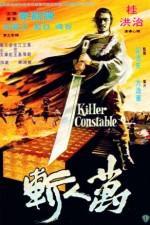
Killer Constable (1981)


aka WAN REN ZAN aka KARATE EXTERMINATORS aka LIGHTNING KUNG FU

Directed by Kuei Chi Hung

The honorably bloodthirsty royal constable, Leng Tian Ying is hired by the Empress Dowager to hunt down a group of gold thieves who have absconded with two million taels of government gold. Constable Leng gathers a select cadre of his finest officers for the mission. Along the way, Leng discovers a much wider reaching plot of a more sinister origin that trails all the way back to the Forbidden City itself.


LinkWithin

Related Posts Plugin for WordPress, Blogger...